




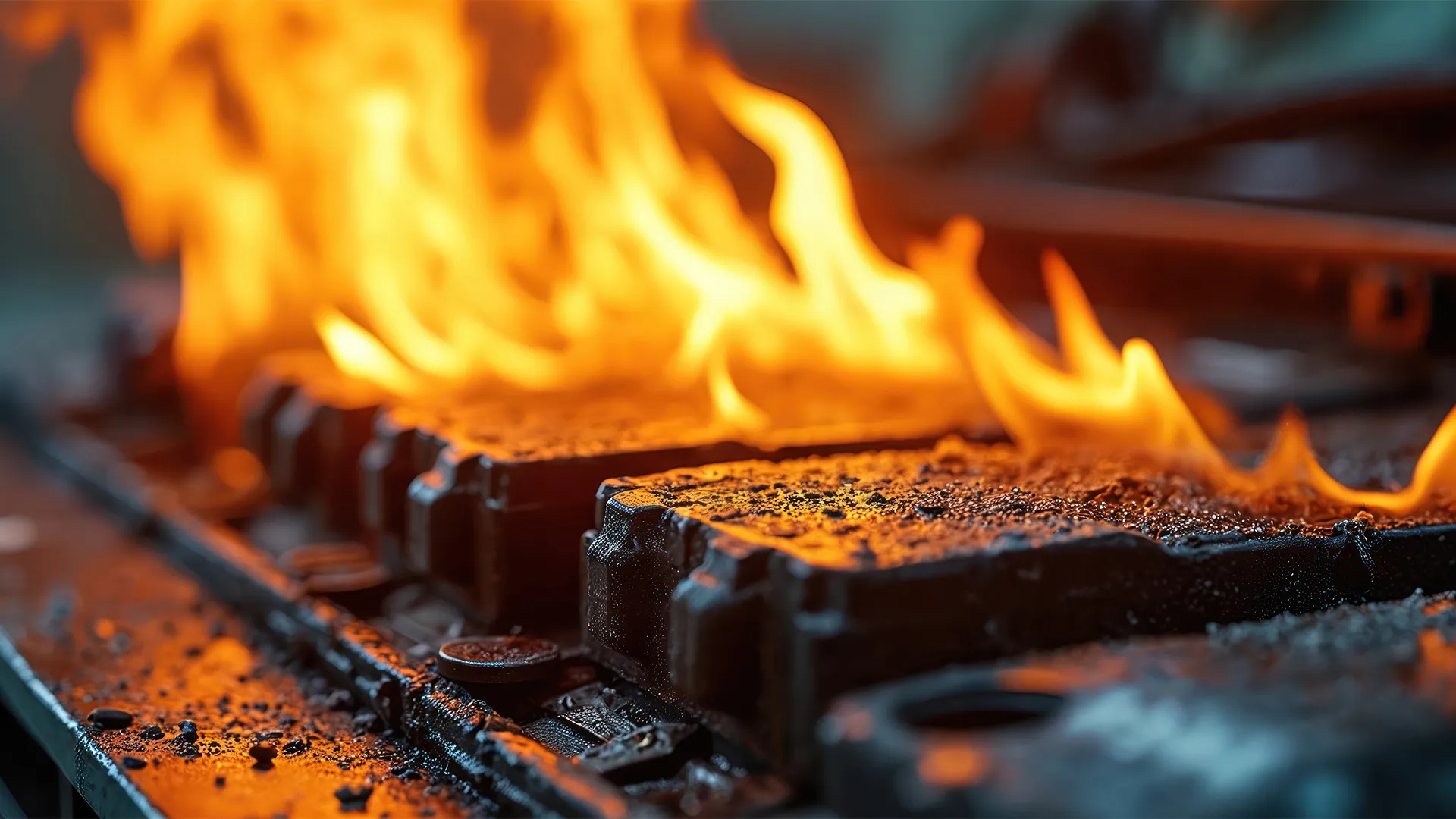

When battery fires were in a trade-off
between power and security...
We'll change the game.
No compromise on high output and safety.
A new proposal for thermal management design.
Thermorphous™ FX25(development product)
A two-component, thermally conductive and insulating potting agent
As lithium-ion batteries continue to increase in power density, across mobility, stationary energy storage (ESS), and server UPS applications, balancing safety and thermal performance is a shared challenge. Conventional approaches often rely on low-thermal-conductivity insulation for thermal-runaway countermeasures, which can compromise heat dissipation during normal operation and lead to complex multi-material designs.
Thermorphous™ FX25 (development product) is a temperature-responsive thermal management material. It is designed to dissipate heat efficiently under normal conditions and suppress heat propagation in high-temperature ranges. We propose a new possibility for thermal design that does not trade-off between safety and output performance.
Flexibility for Your Thermal Design
Thermorphous™ FX25 (development product) is a temperature-responsive thermal management material designed to be provided as a potting material. Its low-viscosity design allows it to potentially fill narrow gaps of approximately 1 mm between battery cells, enabling consideration for application across various battery types and locations, including between cells, within modules, and inside packs.
In addition, processing into three-dimensional molded forms or sheet configurations using molds can also be considered, offering flexibility in how the material may be integrated into required areas depending on specific design needs.
-
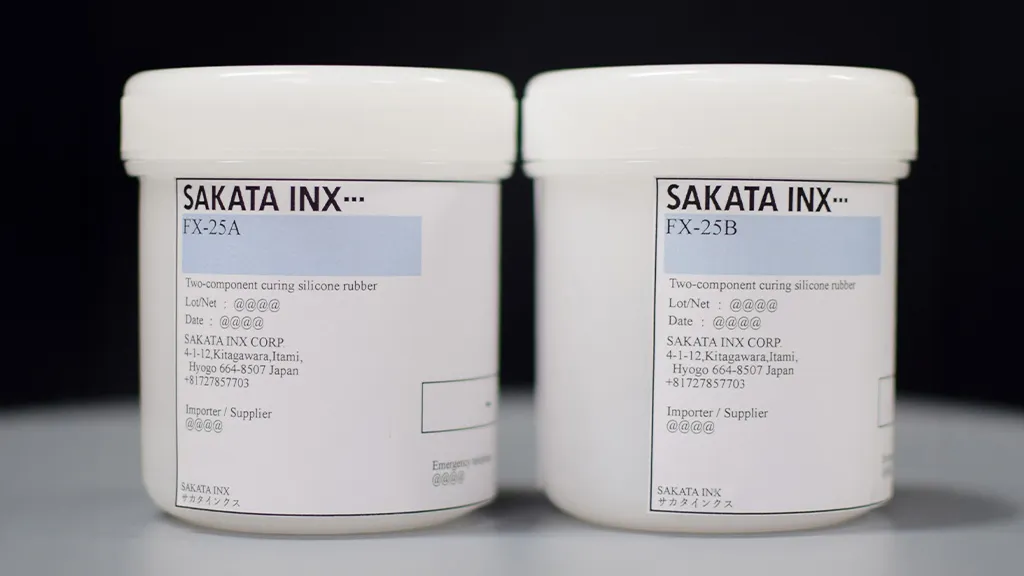
Two-component thermally conductive and insulating potting material Thermorphous™ FX25 (development product) -
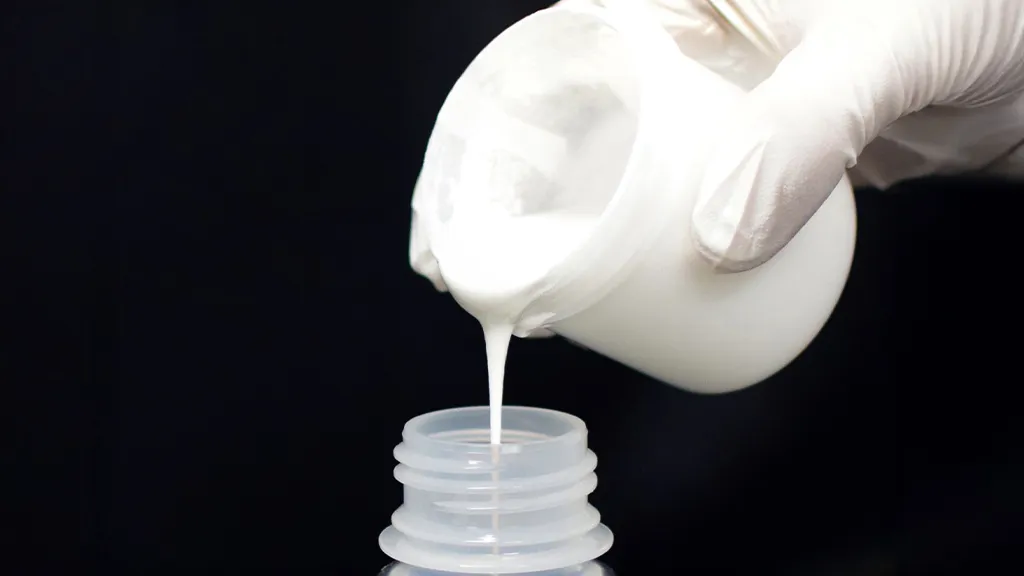
With a mixed viscosity of approximately 3 Pa·s, the material can potentially fill narrow gaps, allowing close contact with heat-generating components. -
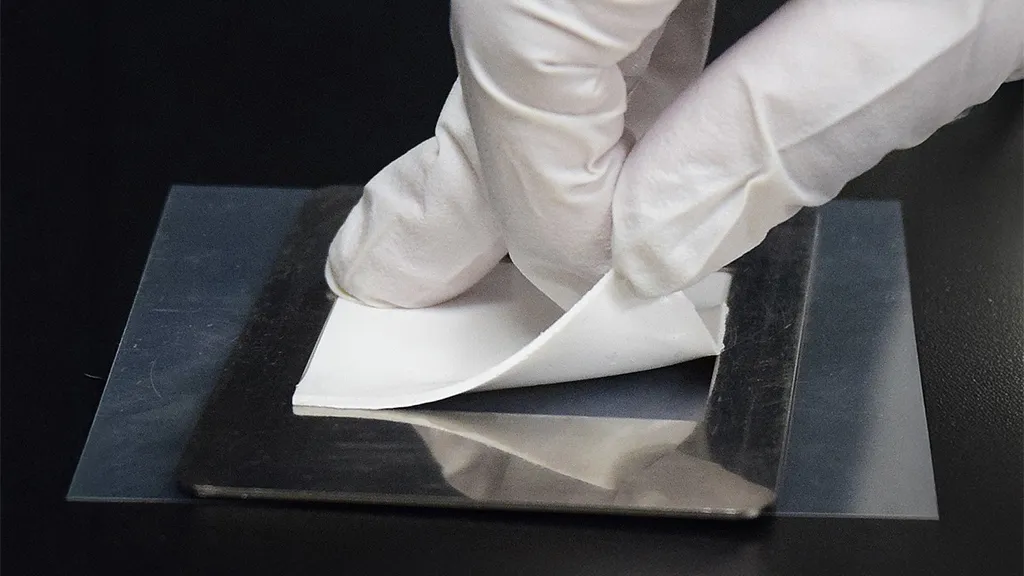
By using molds, processing into sheet forms or three-dimensional structures can also be considered, enabling flexibility in selecting shapes according to design requirements.
Characteristics (Development product)
The following are representative values for reference only. Actual values may vary depending on geometry, and test conditions.
Liquid Properties (after 2‑component mixing, 25°C)
- Viscosity: 3 Pa·s
- Specific gravity: 2.2 g/cm³
Cured Sheet Properties (25°C cured)
- Thermal conductivity (room temperature): 1.0 W/m·K
- Thermal conductivity (during thermal runaway): 0.1 W/m·K
- Cure condition: 25°C / 24 h
- Hardness (Shore A): 60
Remarks
- Information presented includes development-stage data and is subject to change without notice. Effectiveness in actual battery cells remains subject to future evaluation.
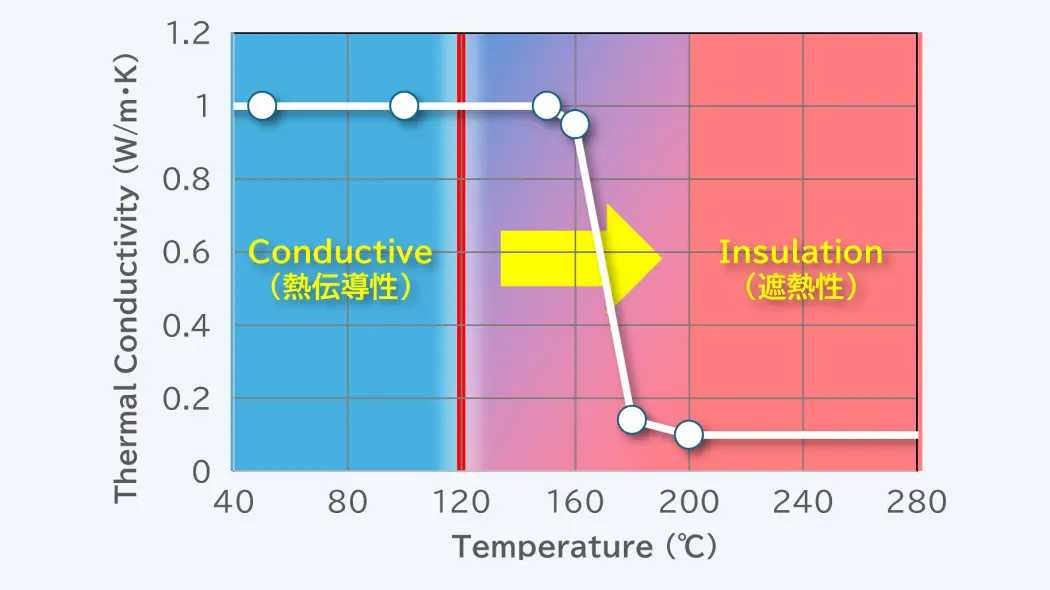
At higher temperature ranges, material properties change and thermal conductivity drops significantly, and an insulating behavior is observed that is expected to suppress heat propagation during thermal runaway.
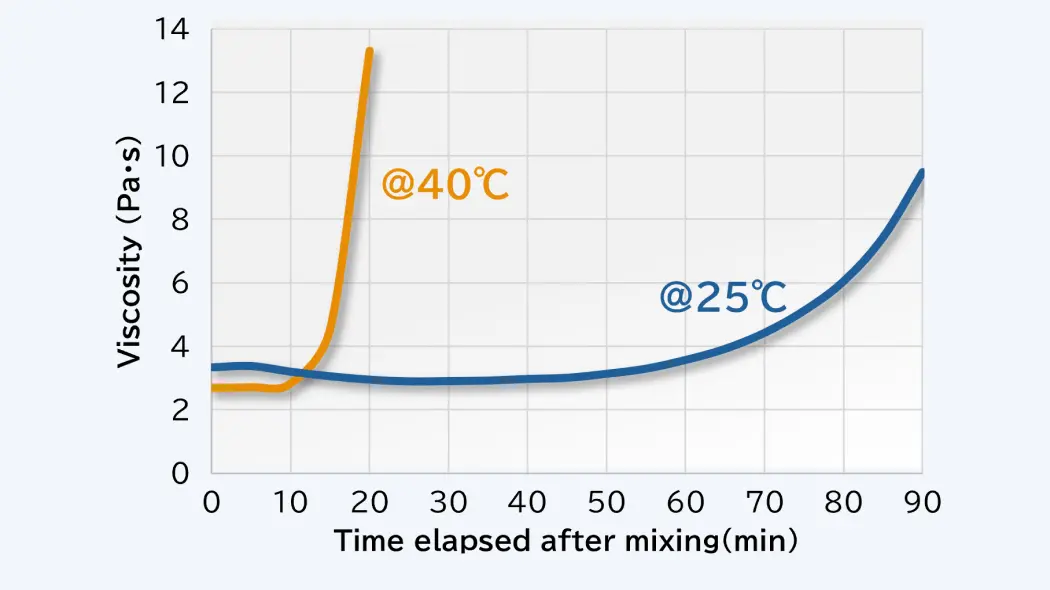
Complete curing takes about 24 hours at room temperature, while the graph indicates the potential to shorten curing time at 40°C.
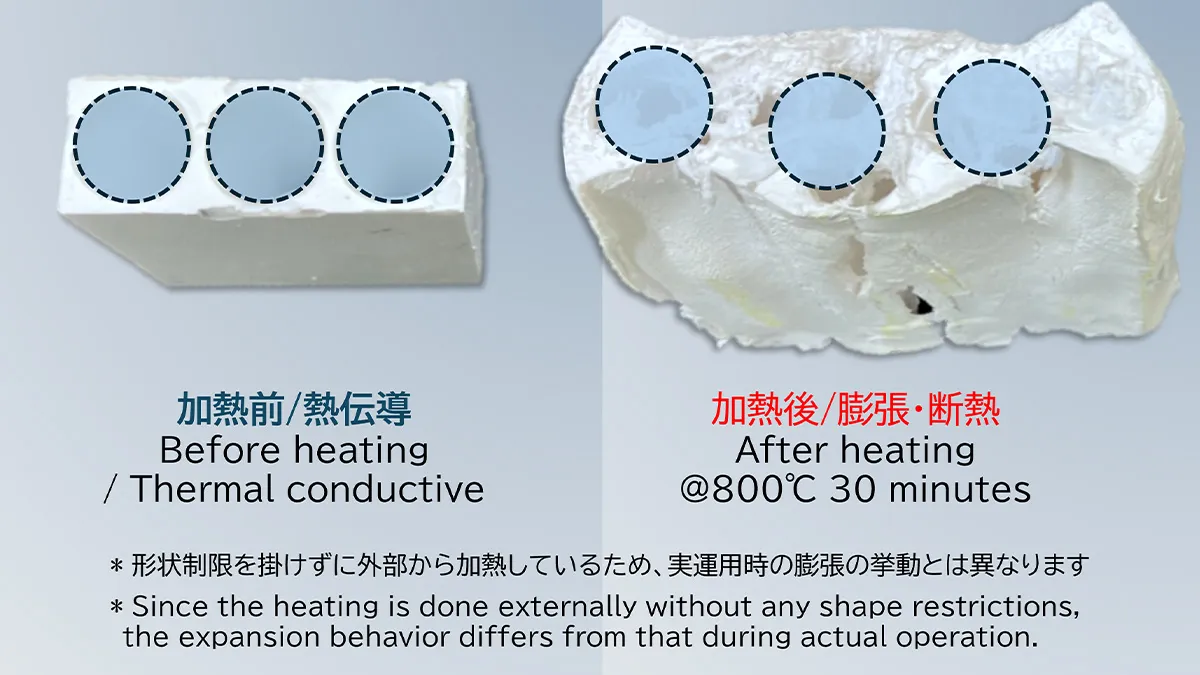
The figure shows the molded body after heating in an 800°C furnace for 30 minutes. Heating causes expansion, and the emergence of insulating behavior is observed.
- Heating was performed without shape constraints; expansion behavior may differ in actual use.
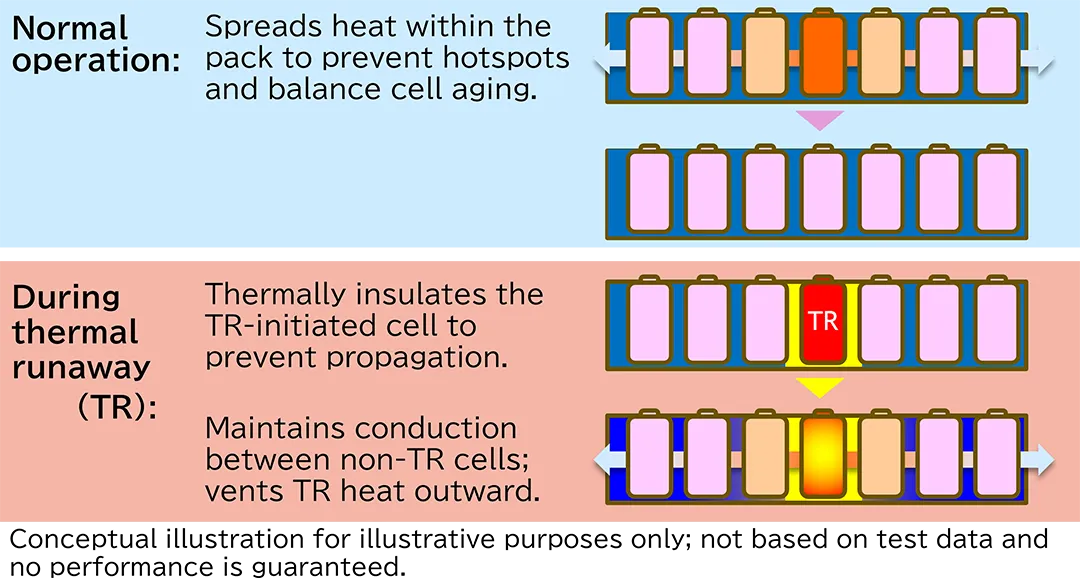
During normal operation
Heat dissipation when normal running
When filled around cells, Thermorphous™ FX25 (development product) exhibits heat dissipation behavior that helps release heat within the pack during normal charge–discharge. In the event of localized hot spots, it may help distribute heat to surrounding areas, potentially contributing to more uniform cell aging.
During thermal runaway
Fire insulation only for TR cells when Fire
When a cell enters thermal runaway, the temperature rises rapidly and the surrounding of Thermorphous™ FX25 (development product) shifts to an insulating behavior in high‑temperature regions, potentially contributing to prevent cascading propagation driven by heat transfer. Meanwhile, areas that have not reached the transition temperature can retain conductive behavior since heat‑release paths via heat sinks or the pack structure are expected to remain effective.
Conceptual illustration for illustrative purposes only; not based on test data and no performance is guaranteed.
A new approach to thermal design for battery packs.
As a low‑viscosity potting material, it can readily reach narrow areas, and when combined with molding or sheet processing, it may broaden the scope for evaluating optimized implementation layouts.
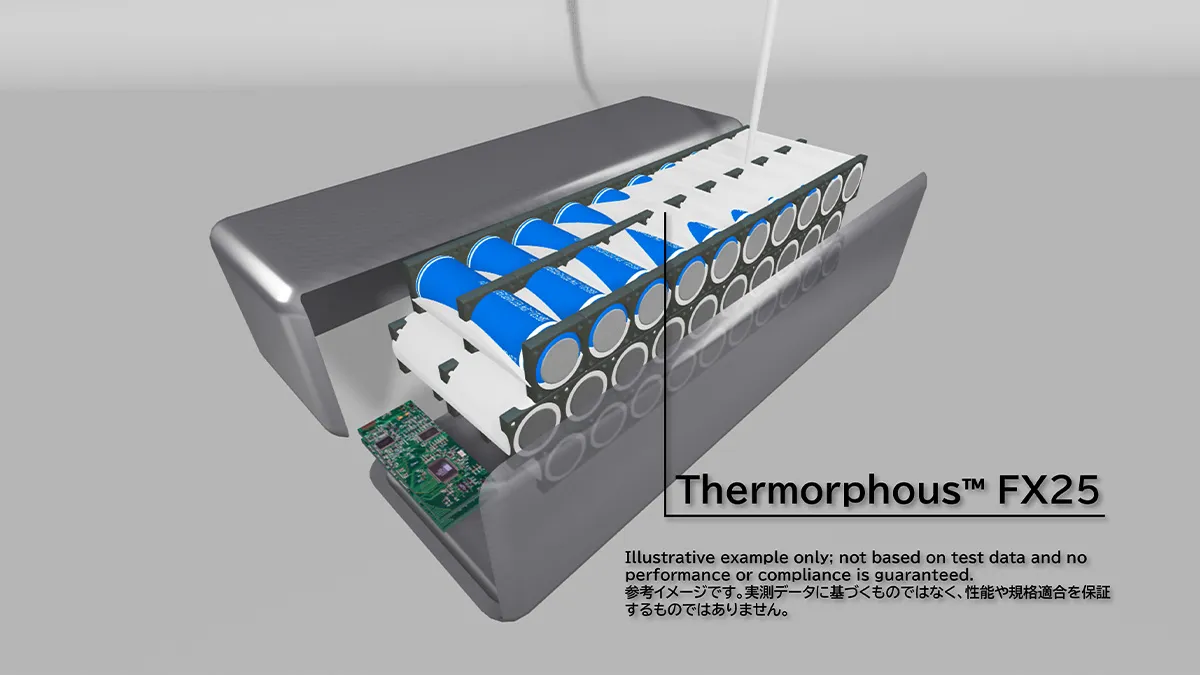
Cylindrical Cells
As energy density increases and cell spacing becomes tighter, the low‑viscosity material may enable filling into narrow gaps between cells.
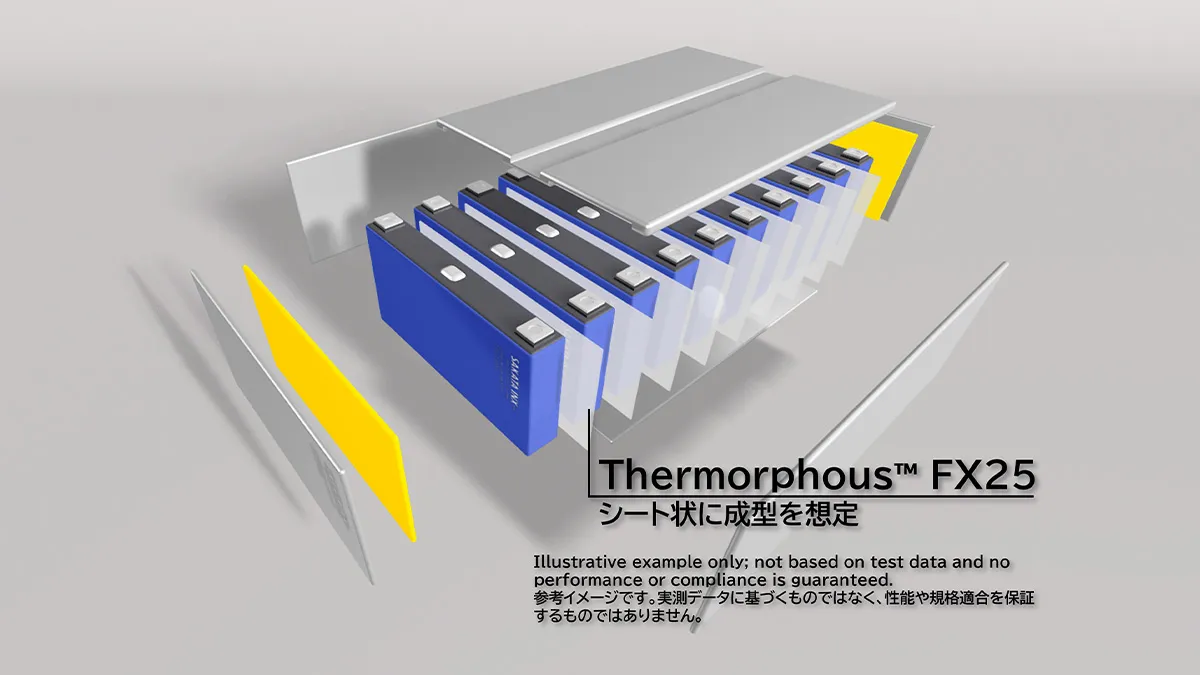
Prismatic Cells / Pouch Cells
While elastic insulating materials are commonly placed between cells, this material also offers potential use cases that address heat dissipation during operation.
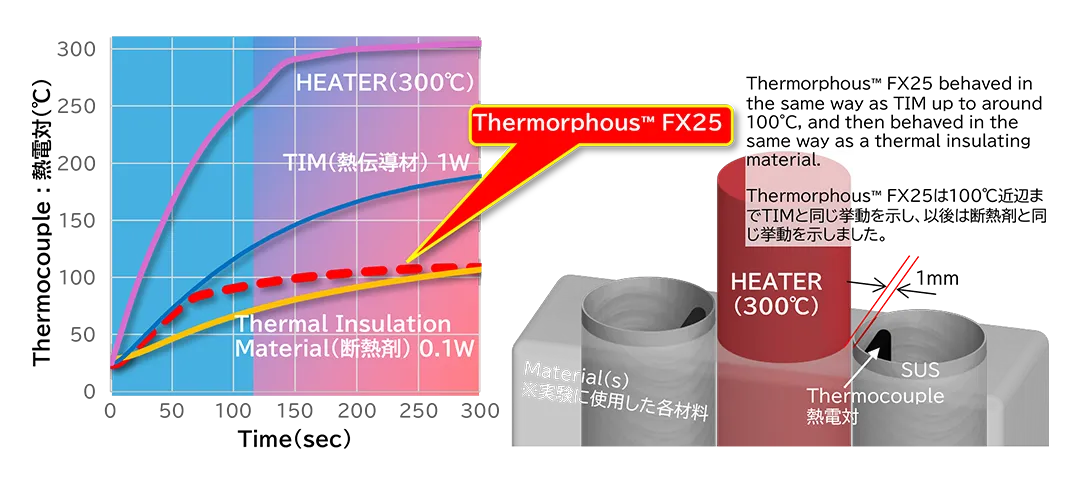
Temperature Migration Test
A thermal migration test was conducted by placing a heater and a metal cylinder simulating an adjacent cell with a 1 mm gap, filled with Thermorphous™ FX25 (development product), and increasing the heater temperature to 300°C. The figure compares heat transfer behavior with thermally conductive and insulating materials. Thermorphous™ FX25 shows behavior similar to a conductive material up to around 100°C, then transitions toward insulating behavior at higher temperatures.
Potting Capability
The left chart shows potting performed on a pack mock‑up simulating adjacent cells with a 1 mm gap, using actual dispensing equipment. Thermorphous™ FX25 (under development) flows into the narrow gaps and can be seen achieving uniform filling.
Filming support: Musashi Engineering, Inc.
FAQ
-
Q
What is the key difference between Thermorphous™ FX25 (under development) and conventional thermally conductive or insulating materials?
AConventional designs generally allocate different materials for conductive (heat‑dissipating) and insulating functions. Thermorphous™ FX25 (under development) is intended to change its behavior with temperature—dissipating heat during normal operation and shifting toward an insulating behavior in higher‑temperature ranges. This may expand design flexibility, especially for battery packs where thermal‑runaway risk is considered.
-
Q
Is the temperature‑dependent behavior change reversible or irreversible, and why?
AIt is intended to be irreversible. Once exposed to higher‑temperature ranges, the material shifts toward an insulating behavior and remains in that state. The concept is to bias the material toward insulation in potentially hazardous temperature ranges, aiming to help suppress heat propagation.
-
Q
Does the transition between conductive and insulating behavior occur uniformly throughout the material, or locally depending on temperature distribution?
AIt is considered local, depending on temperature distribution. Regions reaching higher‑temperature ranges shift toward insulating behavior, while adjacent cooler regions can remain conductive—possibely allowing heat‑release paths (e.g. via heat sinks or the pack structure) to remain active as higher‑temperature areas aim to suppress propagation.
-
Q
What is the minimum thickness at which insulating behavior has been evaluated, and under what test conditions?
AAs a representative example, internal evaluations have been conducted with 1‑mm‑thick molded samples. Under certain conditions, a reduction in thermal conductivity has been observed (e.g. approximately 0.1 W/m·K after 5 minutes at 200°C). These values are representative and may vary with formulation, geometry, and test conditions.
-
Q
How is the evaluation progress in actual battery cells or modules?
AWe are conducting evaluations and verification with a partner in Japan toward adoption decisions.
See What’s Next at BATTERY JAPAN 2026.
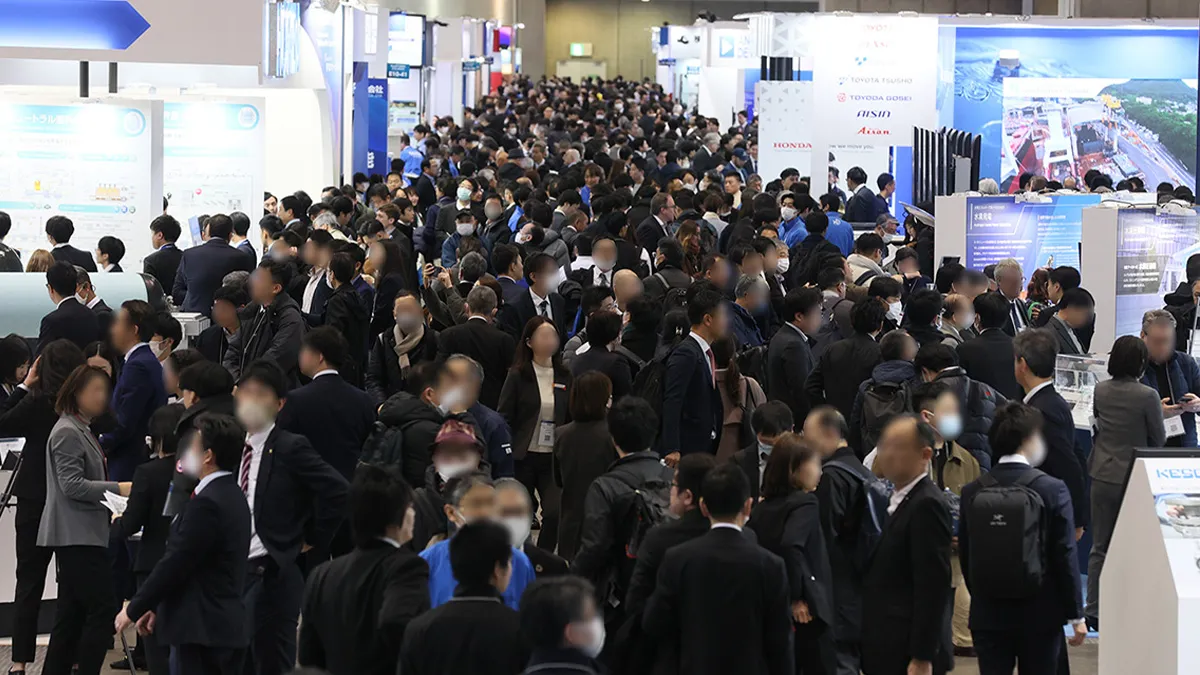
Exhibition Overview
At SMART ENERGY WEEK [March] 2026 — BATTERY JAPAN (International exhibition for Rechargeable Battery) — we showcase “Thermorphous™ FX25” (development product), a temperature‑responsive thermal management material, along with thermal‑migration test results, potting demos, and molded samples, plus an introduction to our co‑development partner Matwerkz Technologies.
Booth No.
S33-1
Related Links
Contact
For inquiries about development status, evaluation approaches, or exhibit details, please feel free to contact us. Technical inquiries are welcomed in Japanese or English.