DEIB WEEK 2026 Report
Lecture by Professor Shingo Ikeda on Balancing Work and Caregiving and a Special Discussion with SAKATA INX Executives
At SAKATA INX, we are advancing DEIB initiatives across the Group with the aim of building an organization that “respects diversity and enables every individual to reach their full potential”.
As part of these efforts, we held our second annual DEIB WEEK over five days, from July 27 to 31, 2026. This year’s theme was “Turning Differences into Organizational Strength: Awareness Begins with Understanding, and Change Begins with Awareness.” The program encouraged employees to recognize differences in values, perspectives, and backgrounds, and to translate the insights gained into consideration and action in their daily work.
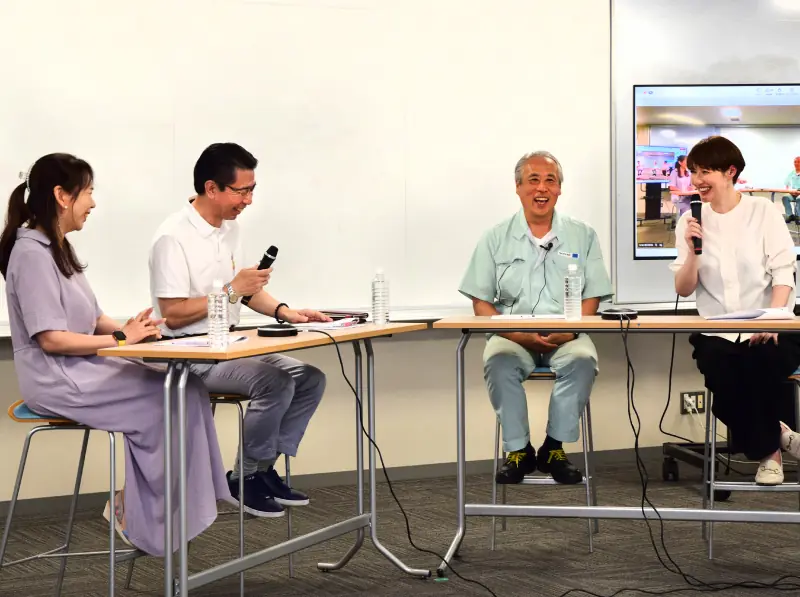
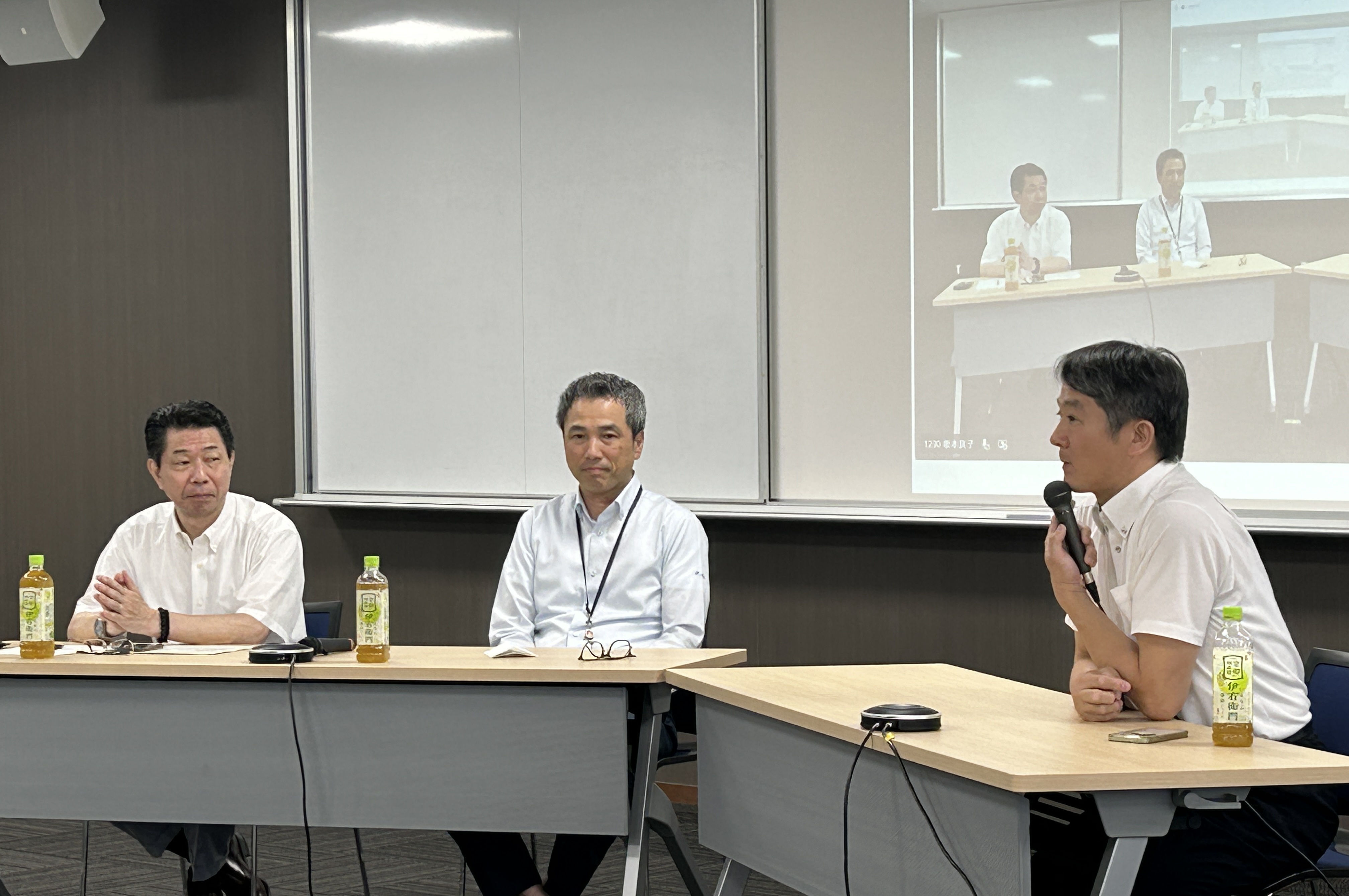
On July 30, we welcomed Professor Shingo Ikeda of the Department of Human Sciences, Faculty of Human Studies, Taisho University, for a special lecture. In the first half, Professor Ikeda spoke on the theme of creating workplaces and work styles that enable employees to balance work and caregiving. In the second half, he was joined by Hirofumi Akao, Executive Officer and General Manager of the Research & Development Division, and Makoto Kasuya, Executive Officer responsible for the Legal Department and Human Resources Development Department, for a special discussion. They exchanged views on SAKATA INX’s approach to supporting employees who balance work and caregiving, as well as on creating a workplace where employees feel comfortable seeking advice.
Lecture Highlights
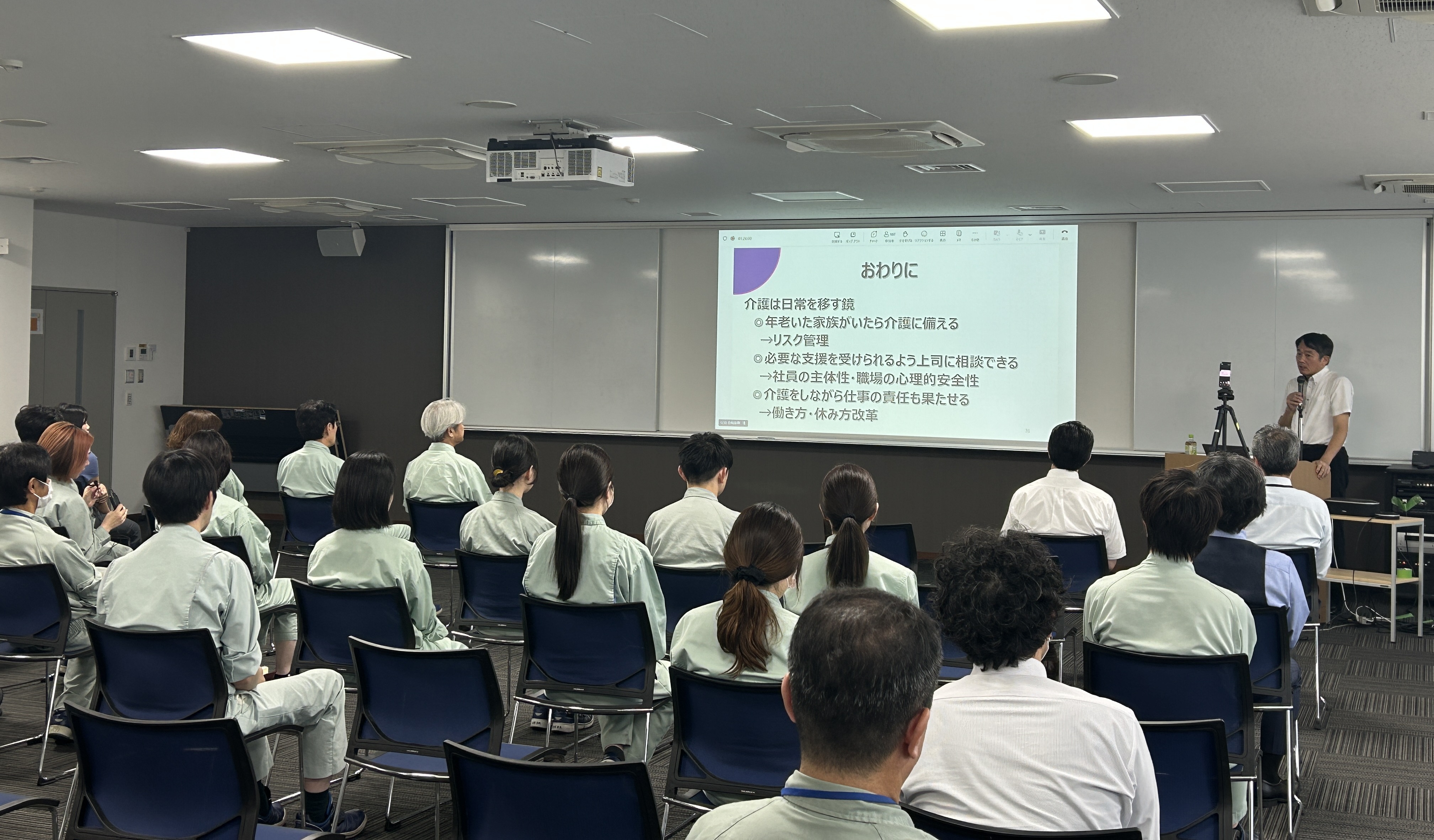
Drawing on the broader social context of caregiving and the realities of employees leaving their jobs to provide care, Professor Ikeda discussed practical approaches to balancing work and caregiving, supported by specific examples. He explained that caregiving leave should be viewed as a period for putting in place the support needed to continue working, and emphasized the importance of making use of professional support and caregiving services rather than placing the entire burden on family members. The lecture gave employees an opportunity to consider work-caregiving balance as an issue that could affect them personally.
Special Discussion
The discussion focused on the use of work-caregiving support programs, creating a workplace where employees feel comfortable seeking advice, and fostering a culture of mutual support throughout the organization. It reaffirmed the importance of viewing caregiving not solely as an individual employee’s responsibility, but as an issue that the employee, workplace, and company should address together to find ways for the employee to continue working.
1. What support should the company provide to help employees balance work and caregiving?
- Kasuya:
- The company offers a range of support programs, including caregiving leave, caregiving time off, and reduced working hours. We aim to create an environment where employees can continue working while making effective use of the information and support available to them.
- Professor Ikeda:
- It is important not only to establish support programs but also to ensure that employees understand their purpose and can use them according to their individual circumstances. Employees and the company need to work together to find ways for employees to continue working when they take on caregiving responsibilities.
2. What can we do to create a workplace where employees feel comfortable discussing caregiving?
- Akao:
- Caregiving should not be treated as an issue for the individual alone. To support employees in balancing work and caregiving across the workplace, each employee should recognize caregiving as an issue that could affect them personally and take action based on that awareness.
- Professor Ikeda:
- It is important to create an environment where employees can seek advice from multiple sources, including colleagues and internal support contacts, rather than relying solely on their immediate supervisor. Building relationships in which employees can openly discuss their circumstances in their day-to-day work helps create a workplace where it is easier to seek advice.
3. How can caregiving be addressed as an organization-wide issue?
- Akao and Kasuya:
- We aim to create a workplace where employees recognize caregiving as a relevant issue that anyone may face, feel comfortable seeking advice when needed, and can continue working while making use of the support programs available to them.
- Professor Ikeda:
- Caregiving is an issue that anyone may encounter, including managers and senior executives. Rather than dividing people into those who provide support and those who receive it, employees and the company should work together to address the issue.
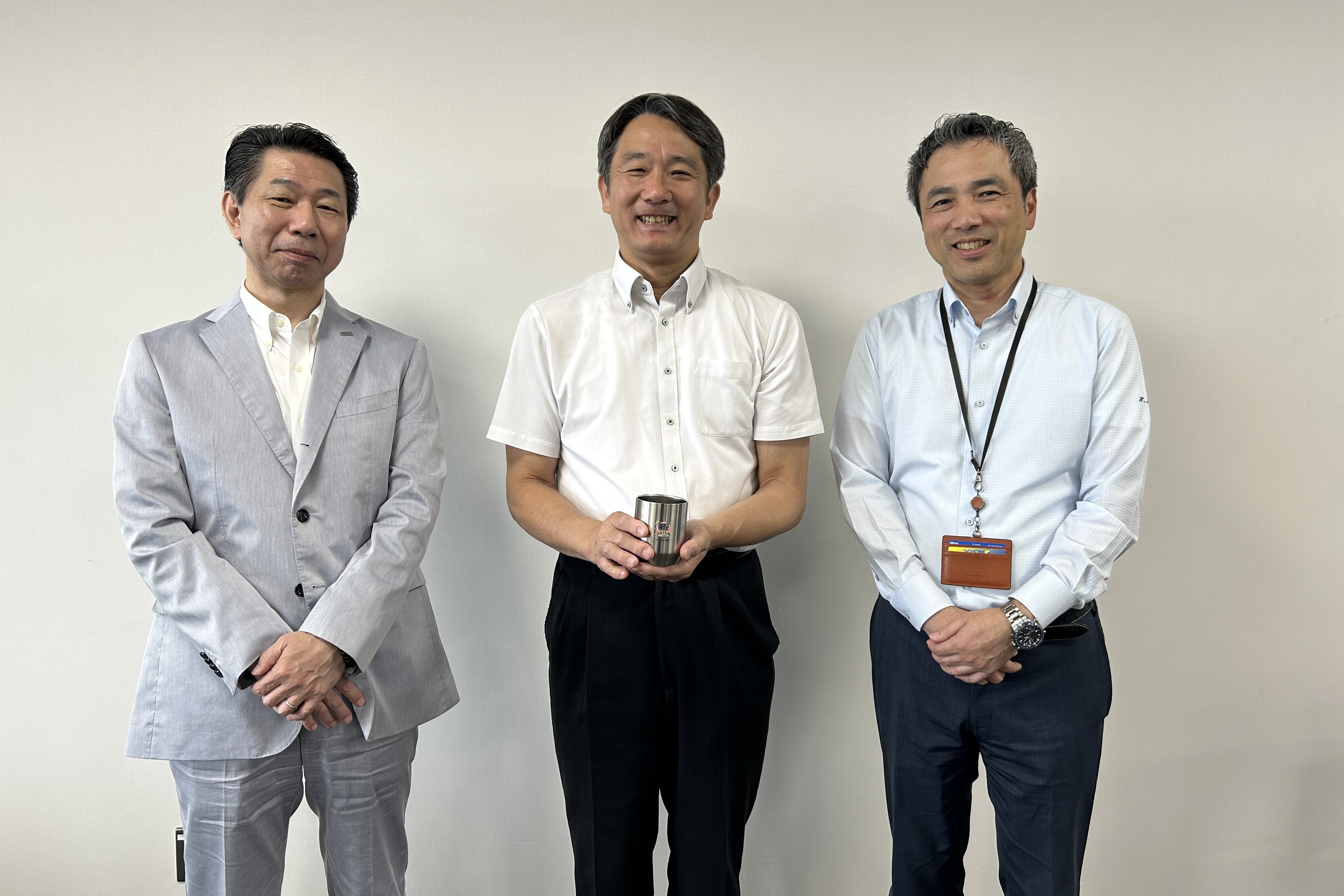
(From left: Kasuya, Professor Ikeda, and Akao)
DEIB WEEK 2025 Report
~Unlocking Authenticity. Shaping the Future.~
Featuring a lecture by Sputniko! titled “Beyond 130 Years:
Shaping SAKATA INX's Future Through DEIB” and a special discussion with our company executives
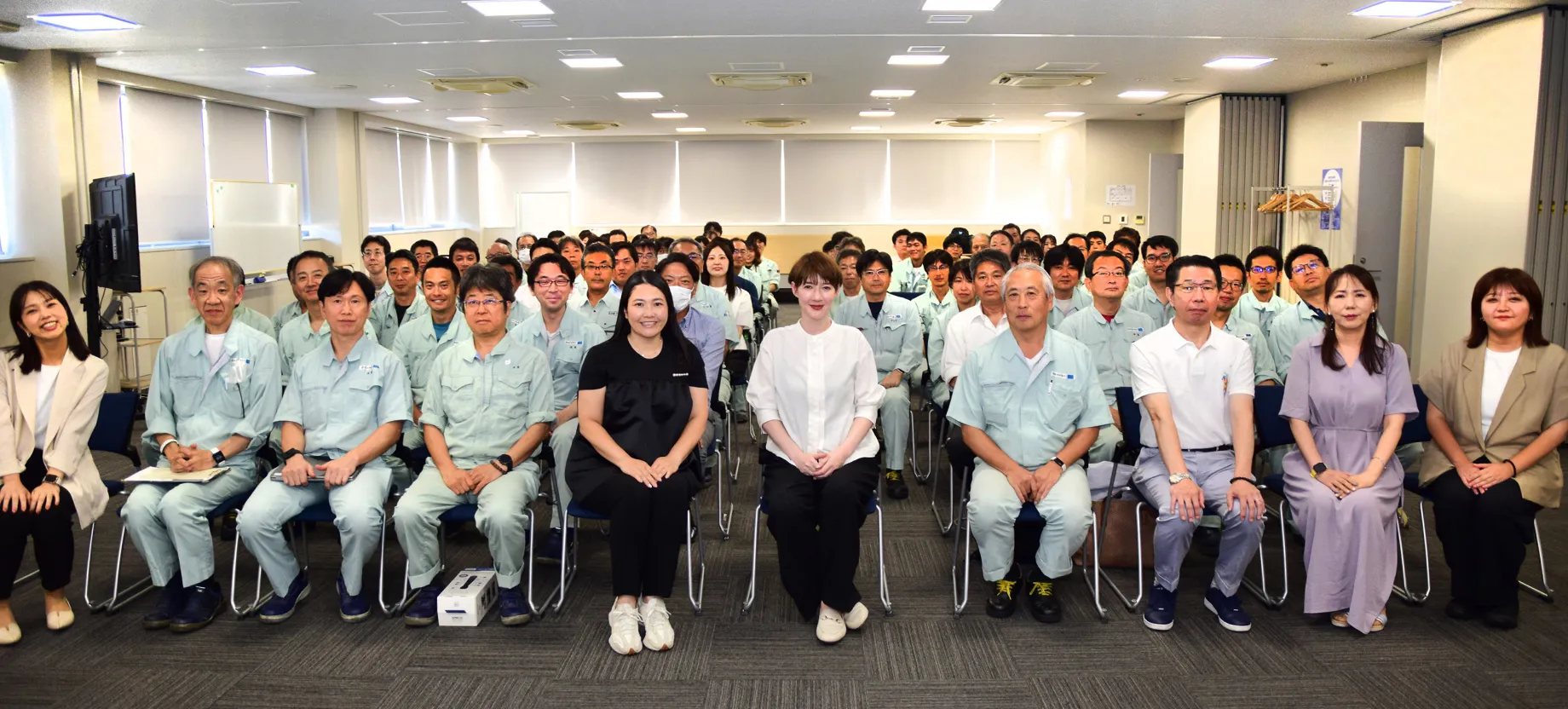
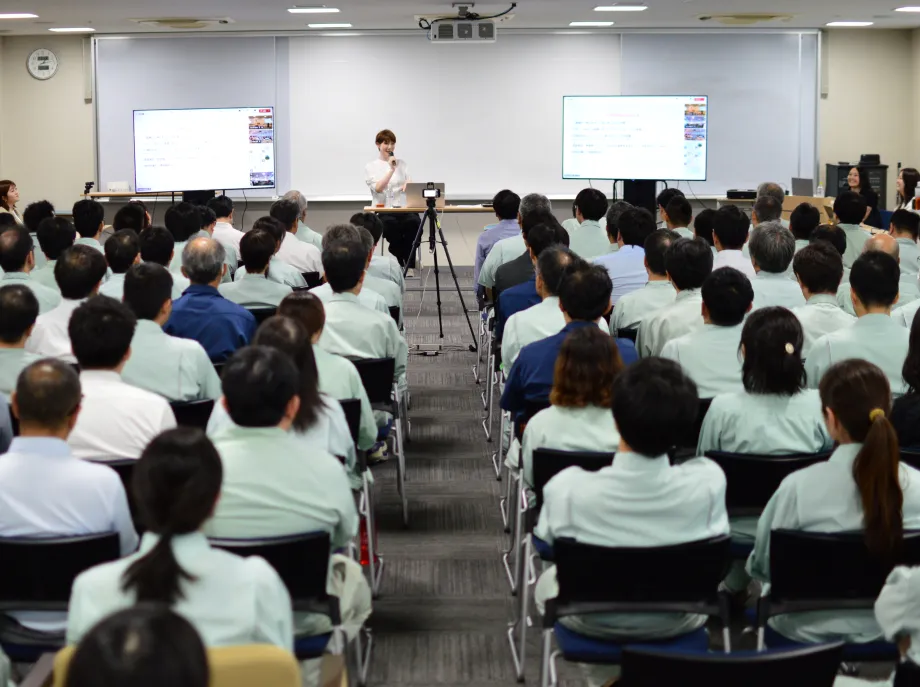
At SAKATA INX, we believe it is vital to recognize and leverage the diverse skills, experiences, values, cultural backgrounds, and differing norms among our employees from various countries. We also prioritize creating an environment where everyone can thrive regardless of circumstances. To achieve this, we are advancing initiatives aimed at building an organization that respects diversity and where each individual can work with pride. To coincide with International Friendship Day on July 30, 2025, we held our first“DEIB WEEK” (July 28 - August 1) under the theme “When Differences Become Strength” — Learn More, Connect More. Throughout the week, we shared daily DEIB-related information organized by theme to deepen employee awareness and understanding. On July 31, we hosted a lecture by Suputniko!, an artist exhibiting globally, a professor at multiple universities, and President and CEO of Cradle Inc., which provides corporate DEIB advancement support services. The first half of the lecture focused on “Equity, Fairness and Unconscious Bias.” The second half featured a special discussion with Sputniko!, joined by our Director and General Manager of Production Management Div., Minoru Tateiri; Executive Officer and General Manager of the Sustainability Dept., Makoto Kasuya; and Executive Officer and General Manager of Corporate Relations Div., Shigemi Kanazawa. They discussed the importance of advancing DEIB and the possibilities for our future that lie beyond realizing these initiatives.
Lecture Highlights
Comparing the Japanese traditional Showa-era work style with the new approaches now required, she explained what equity means from the perspectives of differing values and diversity in society.
Using specific examples, including her own experiences, she provided insightful commentary on “Structural Inequality” – the unconscious ways systems disadvantage specific genders or individuals – offering valuable perspectives on the future of workplaces and small yet significant realizations.
Special Discussion
1. How did SAKATA INX evolve from DE&I to DEIB and what are the initiatives to cultivate “Belonging?
- Sputniko!:
- To foster “belonging,” ensuring psychological safety is crucial—not just institutional frame works. We must also address unconscious biases lurking within good intentions and create environments for open, level-headed dialogue.
- Tateiri:
- We introduced internal job posting systems and HR policies that broaden career options. We aim to cultivate an environment where employees feel that they want to grow with the company fostering pride and unity.
- Kasuya:
- We reflect the “We Love You” spirit from our corporate philosophy in daily management. By spreading a culture of mutual respect, we want to cultivate an environment that encourages taking on challenges.
- Kanazawa:
- We aim for a state where both inside and outside the company, people genuinely feel that we are a “good company.” We want to actively expand well-being initiatives to enhance employees' sense of security and pride.
2. What kind of workplace in manufacturing allows diverse talent, such as women and senior workers, to work comfortably and thrive?
- Sputniko!:
- The perspective of reviewing equipment and rules to ensure safe and secure workplace regardless of gender or age is crucial.
- Tateiri:
- While advancing automation and labor-saving measures, we incorporate diverse perspectives to build an environment where everyone can work safely and securely.
- Kasuya:
- We promote improvements starting from the voices in the workplace. We create systems to resolve small daily inconveniences and anxieties, such as uniforms and work environments.
- Kanazawa:
- We expand opportunities for communication and interaction across locations reflecting the voices of diverse employees in management decisions.
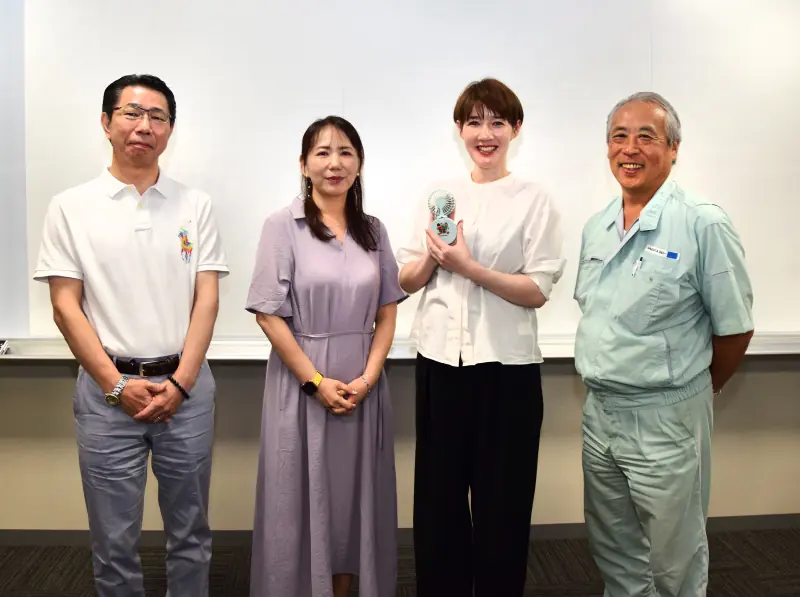
(From left: Kasuya, Kanazawa, Sputniko!,and Tateiri)